
Home | About Us | Rifle and Archery Ranges | Youth Programs
Nursery and Stocking Program
Please contact Dave Swope for more details
Last Updated: Sunday, August 03, 2014
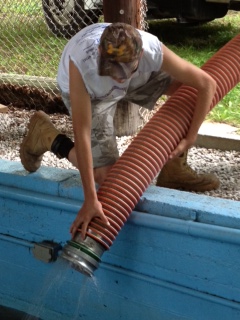
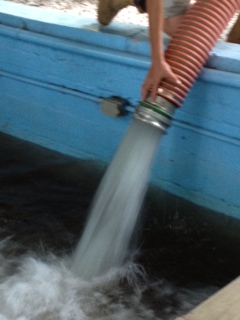
Pictures at hatchery from recent stocking day.
The student holding the hose is Cam Mickley

Youth Fish Mentoring Program
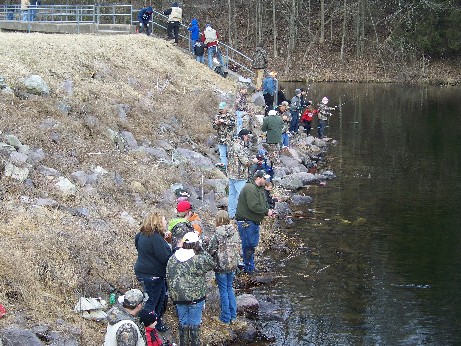
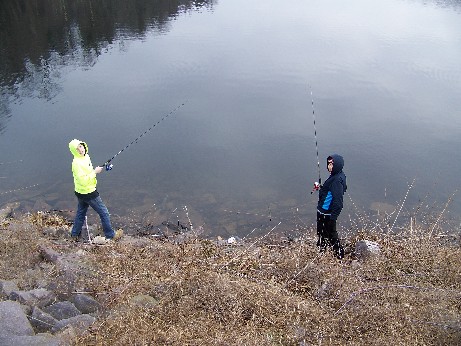
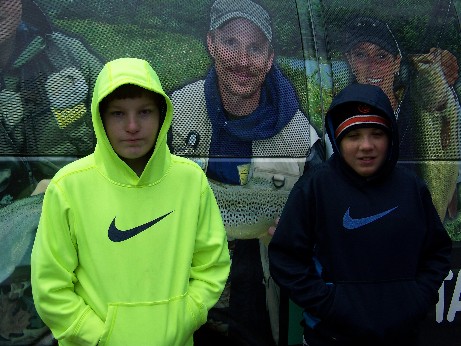
Mentoring youth fishing day in Adams County was very successful on Saturday with fish plentiful and kids having quite a early Easter present. Although the weather was cold the pictures tell the story on a great turnout and a abundant of brookies for everyone to enjoy at the Waynesboro Reservoir. I had the opportunity to treat two youths that beared the cold weather. The new program featured groups of kids coming and going with their limit of trout in minutes of casting. Congratulations PFBC for realizing that opening new doors getting kids involved is important in protecting our land and water for the future. It isn't all about catching fish but understanding what our great outdoors has to offer all of us and why it needs to be protected. It was a great time.
Dave Swope, President Adams County Trout Unlimited
Secretary McSherrystown F&G
PFBC Co-op Manager
Pictures at hatchery from recent stocking day.
The student holding the hose is Cam Mickley
Youth Fish Mentoring Program
Mentoring youth fishing day in Adams County was very successful on Saturday with fish plentiful and kids having quite a early Easter present. Although the weather was cold the pictures tell the story on a great turnout and a abundant of brookies for everyone to enjoy at the Waynesboro Reservoir. I had the opportunity to treat two youths that beared the cold weather. The new program featured groups of kids coming and going with their limit of trout in minutes of casting. Congratulations PFBC for realizing that opening new doors getting kids involved is important in protecting our land and water for the future. It isn't all about catching fish but understanding what our great outdoors has to offer all of us and why it needs to be protected. It was a great time.
Dave Swope, President Adams County Trout Unlimited
Secretary McSherrystown F&G
PFBC Co-op Manager
|
|
History of the Fairfield High School Trout Nursery
by Dave Swope
On November 20, 1973 Adams County Waterways Conservation Officer Warren Singer introduced the McSherrystown Fish and Game Club to an opportunity to establish a trout lab behind the Fairfield High School which students would be given the responsibility of rearing trout and would receive classroom credits. This PFBC Co-op program would be the first of its kind utilizing responsible students for rearing trout. Students are responsible for all aspects of the operation including feeding the trout, monitoring water levels, cleaning the raceway, maintaining daily records through the Co-op booklet guidelines. A visual inspection while feeding is important in noting the behavior of the trout in prevention of disease. The club would handle maintenance, food purchase and costs of repairs. On February 26, 1974, PFBC Robert Brown was the guest speaker at the club and spoke about the Cooperative Nursery Program, indicating 152 nurseries in 45 counties across the State. Presently the Co-op program has 168 nurseries and 151 sponsors in 49 counties.
Annually the nursery receives two inspections from the PFBC Cooperative Division while providing any type support needed to manage the trout facility. Also the Co-op program is monitored every other year with a seminar for each region by the Co-op Division staff answering questions and showing slides of nursery improvements and additions across the State. A dinner is provided at no cost while providing three club members or school students to attend.
In the spring of 1974 excavation and blasting rock to construct a trout nursery began by C. E. Williams. A club open house was held on May 13, 1975 at the new trout nursery built over a spring behind the Fairfield High School. During the open house the club president presented the Agriculture Teacher with a check for $500 towards the program. Annually the club supports the school?s Agriculture Program.
On July 29, 1975 the nursery received 2,000 rainbow trout. The water flow from the spring itself was over 130 gallons per minute and at the end of the rearing season the trout exceeded 15 inches in length. The students responded very readily to the responsibility of rearing trout and excitement in the rearing program was very high. In preparation for the 2nd year, the club ordered 2,000 rainbows, 2,000 browns and 25 albino trout respectively. Also in the same year the club purchased a hauling tank and pump to facilitate moving the trout to their new homes in Adams County streams.
In 1977 water flow problems occurred at the Fairfield Nursery. In June 1977 work was approved by PFBC Chief Biologist Paul Byers to increase the spring flow problems. In 1980 the club added 75 feet extension to the nursery in order to rear more trout. A dusk to dawn light was installed over the nursery with the High School covering the entire cost of electrical power for the nursery.
In 1981, the Fairfield Nursery received its largest allocation of trout fingerlings from the PFBC totaling 4,500 consisting of brown, rainbow, brook and rainbow trout. In 1981 the club formed a fish committee and held 165 trout over until the next stocking season and developed some problems with two-year old fish in the spawning season. With good results at this time, the club was receiving non member donations for the success of the program. A footbridge was constructed from the school?s parking lot to the raceway by club members for accessibility to the nursery. Float stocking boxes were constructed in order to move trout to inaccessible section of the streams and spread the trout more downstream. In 1984 automatic feeders were experimented in order to provide a better feeding program but the feeders were clogging up because of the climate and moisture from the waterway which was slowing the fish growth. Daily feeding by broadcasting was more productive. A new storage building was constructed and a permanent raceway enclosure was added for security utilizing mostly donated materials.
Over the years new housing development around town has lower the spring water flows and a well was installed for a supplemental water supply through the Cooperative Grant Program which required matched funding to be successful in obtaining the grant. Over the years, electrical problems resulted in fish mortalities shutting down the Sweetwater Blower operation, to correct this continuing problem, the club has secured another match funding grant to install a backup propane generator for power. Recently the club rebuilt the footbridge and installed telephone poles to facilitate the overflow from the spring catch basin under the footbridge to prevent erosion problems. The fingerlings are received from PFBC Reynoldsdale Fish Culture Station at no cost in the 1st week in July and are reared and released as a supplement to the PFBC inseason stocking program in which over 3 million are released annually across the State by the PFBC Cooperative Program.
The Fairfield facility has seen many different faces in operating the co-op program including students and teachers, just a few in support members from the PFBC Co-op staff and a few nursery manager?s over the 35 years of operation. The program continues to provide a better fishing opportunity for the community and a learning, educational opportunity with the students at the Fairfield High School.
In 2010 the partnership, the first of its kind in Penna. will celebrate 35 years in the Cooperative Nursery Program.
by Dave Swope
On November 20, 1973 Adams County Waterways Conservation Officer Warren Singer introduced the McSherrystown Fish and Game Club to an opportunity to establish a trout lab behind the Fairfield High School which students would be given the responsibility of rearing trout and would receive classroom credits. This PFBC Co-op program would be the first of its kind utilizing responsible students for rearing trout. Students are responsible for all aspects of the operation including feeding the trout, monitoring water levels, cleaning the raceway, maintaining daily records through the Co-op booklet guidelines. A visual inspection while feeding is important in noting the behavior of the trout in prevention of disease. The club would handle maintenance, food purchase and costs of repairs. On February 26, 1974, PFBC Robert Brown was the guest speaker at the club and spoke about the Cooperative Nursery Program, indicating 152 nurseries in 45 counties across the State. Presently the Co-op program has 168 nurseries and 151 sponsors in 49 counties.
Annually the nursery receives two inspections from the PFBC Cooperative Division while providing any type support needed to manage the trout facility. Also the Co-op program is monitored every other year with a seminar for each region by the Co-op Division staff answering questions and showing slides of nursery improvements and additions across the State. A dinner is provided at no cost while providing three club members or school students to attend.
In the spring of 1974 excavation and blasting rock to construct a trout nursery began by C. E. Williams. A club open house was held on May 13, 1975 at the new trout nursery built over a spring behind the Fairfield High School. During the open house the club president presented the Agriculture Teacher with a check for $500 towards the program. Annually the club supports the school?s Agriculture Program.
On July 29, 1975 the nursery received 2,000 rainbow trout. The water flow from the spring itself was over 130 gallons per minute and at the end of the rearing season the trout exceeded 15 inches in length. The students responded very readily to the responsibility of rearing trout and excitement in the rearing program was very high. In preparation for the 2nd year, the club ordered 2,000 rainbows, 2,000 browns and 25 albino trout respectively. Also in the same year the club purchased a hauling tank and pump to facilitate moving the trout to their new homes in Adams County streams.
In 1977 water flow problems occurred at the Fairfield Nursery. In June 1977 work was approved by PFBC Chief Biologist Paul Byers to increase the spring flow problems. In 1980 the club added 75 feet extension to the nursery in order to rear more trout. A dusk to dawn light was installed over the nursery with the High School covering the entire cost of electrical power for the nursery.
In 1981, the Fairfield Nursery received its largest allocation of trout fingerlings from the PFBC totaling 4,500 consisting of brown, rainbow, brook and rainbow trout. In 1981 the club formed a fish committee and held 165 trout over until the next stocking season and developed some problems with two-year old fish in the spawning season. With good results at this time, the club was receiving non member donations for the success of the program. A footbridge was constructed from the school?s parking lot to the raceway by club members for accessibility to the nursery. Float stocking boxes were constructed in order to move trout to inaccessible section of the streams and spread the trout more downstream. In 1984 automatic feeders were experimented in order to provide a better feeding program but the feeders were clogging up because of the climate and moisture from the waterway which was slowing the fish growth. Daily feeding by broadcasting was more productive. A new storage building was constructed and a permanent raceway enclosure was added for security utilizing mostly donated materials.
Over the years new housing development around town has lower the spring water flows and a well was installed for a supplemental water supply through the Cooperative Grant Program which required matched funding to be successful in obtaining the grant. Over the years, electrical problems resulted in fish mortalities shutting down the Sweetwater Blower operation, to correct this continuing problem, the club has secured another match funding grant to install a backup propane generator for power. Recently the club rebuilt the footbridge and installed telephone poles to facilitate the overflow from the spring catch basin under the footbridge to prevent erosion problems. The fingerlings are received from PFBC Reynoldsdale Fish Culture Station at no cost in the 1st week in July and are reared and released as a supplement to the PFBC inseason stocking program in which over 3 million are released annually across the State by the PFBC Cooperative Program.
The Fairfield facility has seen many different faces in operating the co-op program including students and teachers, just a few in support members from the PFBC Co-op staff and a few nursery manager?s over the 35 years of operation. The program continues to provide a better fishing opportunity for the community and a learning, educational opportunity with the students at the Fairfield High School.
In 2010 the partnership, the first of its kind in Penna. will celebrate 35 years in the Cooperative Nursery Program.
Photos from Stocking of local streams
Home | About Us | Facility Rentals | News and Current Events | Rifle and Archery Ranges | Schedule of Events | Youth Programs
McSherrystown Fish and Game Protective Association
2 Fish & Game Road, New Oxford, PA 17350
Phone: 717-624-2668